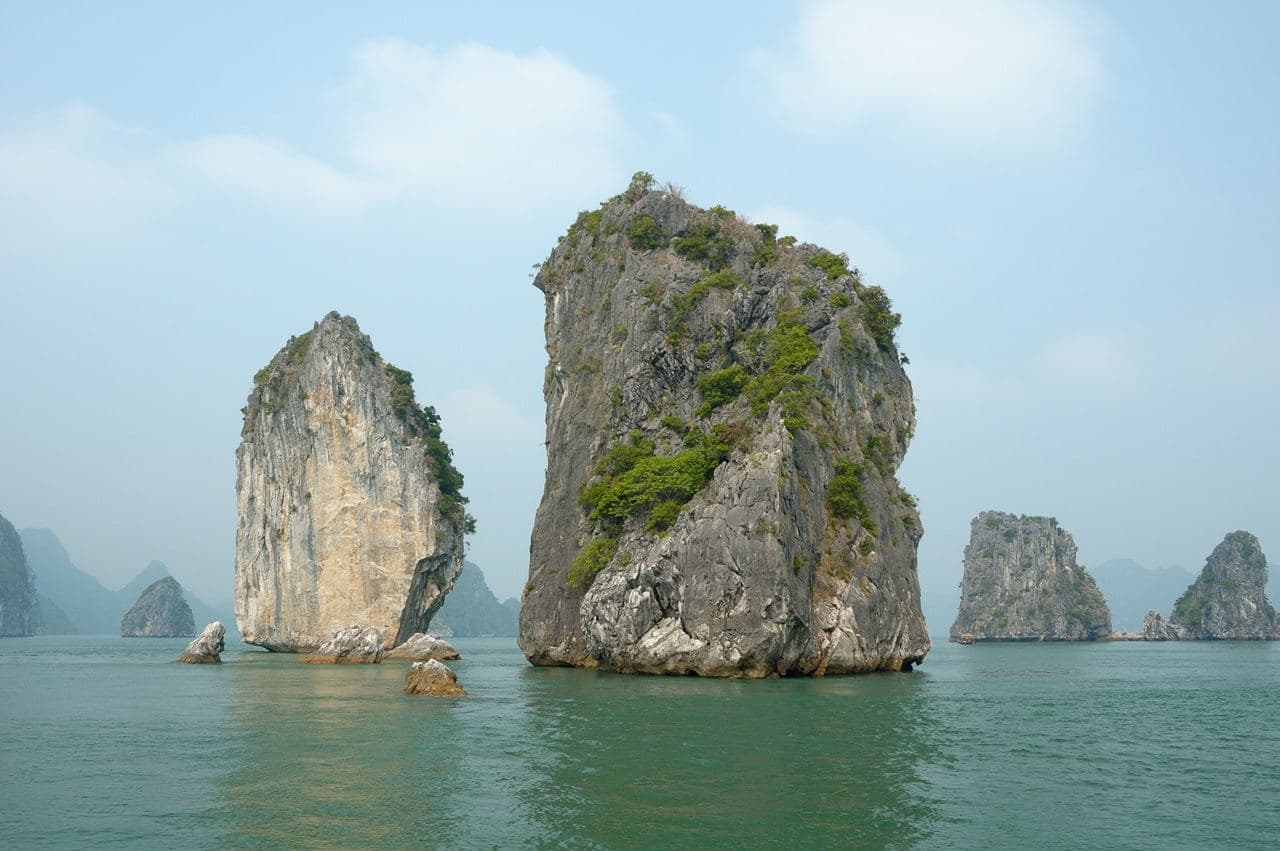
Greetings from
Vietnam
Vietnam
Three countries' worth of climate in one, so the calendar depends on where you land
Vietnam is long and thin enough that the north, centre and south run on three almost independent climates, so a "best time to visit" answer for Hanoi can be close to wrong for Ho Chi Minh City in the same month.
Our verdict
March and April offer the best three-region balance for a single trip. If your itinerary is weighted towards the centre (Hoi An, Da Nang, Hue), avoid September to November; if it's weighted towards the north, aim for autumn (September-November) or spring instead.
Is it a good time to go?
We’re going to Vietnam from to .
Add your dates, or pick a school holiday, to see whether Vietnam is in busy, sweet-spot or quiet season then, and whether your dates hit a UK school holiday.
Some links on this page are affiliate links. We may earn a commission if you book through them, at no extra cost to you.
Vietnam through the year
Tap a month for the detail
Tap a month to see what it’s like in Vietnam.
Temperatures: ten-year averages from the Ha Noi weather station (3.8 km away), via Meteostat, 2016–2026. Rain: NASA POWER satellite-derived data, 2016–2026.
How the year plays out
Seasons explained
Northern Vietnam, around Hanoi and Ha Long Bay, has four real seasons: a cool, often drizzly winter from December to February, a hot and increasingly wet summer from May to August, and its two most pleasant stretches in spring (March-April) and autumn (September-November). Central Vietnam, home to Hoi An, Da Nang and Hue, runs almost in reverse: warm and largely dry from February to August, then hit by the year's heaviest rain and the bulk of the country's typhoon risk from September to December. Southern Vietnam, including Ho Chi Minh City and the Mekong Delta, is the simplest of the three: consistently hot with a dry season from December to April and a wet season of predictable afternoon downpours from May to November.
Because the three zones rarely align, the closest thing to a nationwide sweet spot is spring, March and April, when the north is mild and increasingly dry, the centre is already in its dry season, and the south is hot but not yet deep into its wet season. November through February works almost as well and adds Hanoi's best autumn light, though Tet, the Lunar New Year (dates vary, usually falling in January or February), brings a sharp nationwide spike in domestic travel that fills trains, flights and hotels for roughly a week. Central Vietnam is the one region genuinely worth avoiding from September to November, when typhoon season is at its height.
For UK families
Vietnam in the school holidays
October half term lands in one of the north's best windows but inside the central coast's typhoon season, so an itinerary that's mostly Hanoi and the north works well, while a Hoi An-heavy trip is riskier. The summer holidays bring heat and rain to the north and building typhoon risk to the centre, though the south stays reliably warm through its wet season of short afternoon showers. Easter usually falls in the strong spring window across all three regions. Christmas and New Year sit inside the good-weather season nationwide, but if your dates land on Tet itself, book well ahead: it's the busiest travel week of the Vietnamese year.
Pick a school holiday in the date checker at the top of the page to see the exact term dates and typical premium for your region.
Quick answers
Frequently asked
When is the best time to visit Vietnam?
March and April offer the best three-region balance for a single trip. If your itinerary is weighted towards the centre (Hoi An, Da Nang, Hue), avoid September to November; if it's weighted towards the north, aim for autumn (September-November) or spring instead.
When is Vietnam most expensive?
Our price index puts January, February, March, April and December at the top of the year for Vietnam. The cheapest months on the same index are June, September and October. The month-by-month view above shows the full picture, with UK school holidays marked.
Is Vietnam a good choice for the UK school holidays?
October half term lands in one of the north's best windows but inside the central coast's typhoon season, so an itinerary that's mostly Hanoi and the north works well, while a Hoi An-heavy trip is riskier. The summer holidays bring heat and rain to the north and building typhoon risk to the centre, though the south stays reliably warm through its wet season of short afternoon showers. Easter usually falls in the strong spring window across all three regions. Christmas and New Year sit inside the good-weather season nationwide, but if your dates land on Tet itself, book well ahead: it's the busiest travel week of the Vietnamese year.
Does it rain a lot in Vietnam?
On average, Vietnam sees the fewest rainy days in December (around 3 days with rain) and the most in August (around 26 days). The month-by-month view above shows every month, and our data sources page explains how this is measured.
Are there festivals or events that affect prices in Vietnam?
Yes — Vietnam hosts Tet (Lunar New Year) in February, which can push prices above the usual seasonal pattern that month. Exact dates vary by year; check the month-by-month view above and confirm against the event's own listing before booking.
More postcards from further afield


Ready to book Vietnam?
You've seen the months, the prices and the weather. Here's the fastest way to check live prices.
Search ExpediaSome links on this page are affiliate links. We may earn a commission if you book through them, at no extra cost to you.